Before the Training Log: How People Kept Track of Practice
Before the training log, people used memory, calendar marks and pocket notes to recall practice. Choose a simple record that helps you remember what you enjoy.
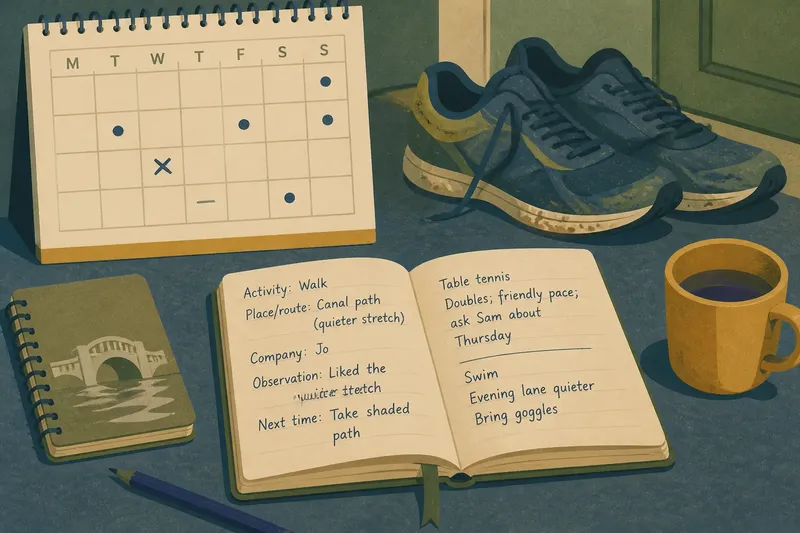
The common mistake with a training log is assuming it must capture every session. That can make a pleasant activity feel like paperwork, and a forgotten note can blur an otherwise clear memory. Before the training log, people used routines, conversation and simple marks to remember what they had done; those options still suit recreational practice.
Memory and routine
People often recalled practice through familiar details. A walker might remember the path by the bend near a bridge; a swimmer might associate a visit with a particular day or companion. Memory is not an exact record, but exactness is rarely needed just to decide whether an activity still appeals.
Repeated surroundings can help too. Muddy shoes by the door may remind you of a walk, while a regular meeting with a friend can prompt a memory of playing together. These cues are part of ordinary life, not a measure of whether a session met a standard.
Memory is useful for broad questions such as, “Have I been getting out for a walk?” If you want to recall which route felt comfortable, a short note may be more dependable than trying to reconstruct the detail later.
Calendar marks
A dot, cross or short line on a calendar can answer one simple question: did you take part? It need not stand for duration, distance or effort. A mark can just jog your memory when you look back.
Say you play casual badminton and want to remember which evenings you went to the hall. You put a dot beside an evening after returning, then add “doubles” when the type of game matters. Later, the calendar can remind you when you played and what you enjoyed, without grading either one.
A blank day is not a verdict. It might mean you rested, had other plans, faced poor weather or simply forgot to make a mark. Avoid assigning a meaning to an empty space unless you know what happened.
Dedicated notebooks
As activities and interests vary, a calendar mark may not preserve the detail you want. A notebook gives you room to record a route, a drill to repeat or a useful reminder. Keep the entry descriptive: “tried the quieter lane” can help you choose next time, while “enjoyed the company” may remind you why you wanted to go.
Paper suits a quick, private note. A pocket notebook is easy to carry; a wall calendar makes occasions easy to glance at. A phone note is convenient if your phone is already with you, while a spreadsheet can sort entries by activity or place. Choose based on the question you want to answer, not on how many features a tool offers.
Useful details
Keep details that help you remember an experience or make a future choice. A short entry might include:
- Activity: Write “swim”, “table tennis” or “walk”. If the activity is already obvious, leave it out.
- Place or route: Name the pool, court or path if it affects where you might go next; otherwise, skip it.
- Company: Note a friend, group or solo outing if the social side matters; if it does not, no name is needed.
- Observation: Record one detail, such as “the back court was quieter”; if you have nothing useful to add, leave the line blank.
- Next-time reminder: Add a practical prompt, such as “bring a water bottle” or “take the shaded path”; if there is no reminder, do not invent one.
- Format: Use a calendar mark for occasions and a notebook or phone note for detail; if recording starts to feel like a chore, return to a single mark or stop.
Detail and effort
Enough detail means you can recognise the experience when you read the note later. “Walked by the canal with Jo; liked the quieter stretch” may guide a future choice. A full account of every turn and sensation takes more effort and may not help you decide anything.
Imagine you finish a table-tennis session and want to remember why you enjoyed it. You write “played doubles; friendly pace; ask Sam about Thursday”. The activity and mood help you recall the session, and the final phrase gives you a clear next action. If that note feels too long, keep only “doubles, friendly pace”.
Use figures only when they answer a question you genuinely have. Someone learning a game might note which serve they practised; someone choosing an enjoyable walk may care more about the scenery. Do not add numbers simply because a device or form makes them available.
Signs of pressure
Notice when keeping a record changes how you feel about taking part. If you choose an activity mainly to fill a blank, feel guilty about a gap or hide a page because it seems unimpressive, the system may be asking more of you than recreation requires.
You can stop recording, switch to occasional notes or remove the detail that creates pressure. A reminder such as “bring trainers” can support a future outing; a running total may encourage comparison you never wanted. Keep what helps and discard what does not.
Choosing a record
A calendar works for remembering occasions. A pocket notebook suits observations and small reminders. A phone note is easy to search, and a spreadsheet can help sort entries if you want to look back by activity or place.
Start with the least demanding option that answers your question. If you only want to remember whether you visited the pool, use a mark. If you want to recall which lane felt calm, add a few words. If the record does not help you make sense of practice, set it aside.
Questions about practice records?
Do I need to record every session?
No. Record only when it serves a purpose you value, such as remembering a route or noting what made a game enjoyable. It is fine to skip an entry or keep no record at all.
Should I track duration or distance?
Only if those details help you make a decision about your own practice. For recreational activity, a note about place, company or how the session felt may be more useful than a figure.
Is a paper log better than an app?
Neither is automatically better. Paper makes a brief, private note straightforward, while an app may make entries easier to search. Choose the format that feels least intrusive.
What if I stop using my log?
Let it rest or start again with a smaller record if you still want one. A forgotten notebook is not a debt to repay, and you do not need to reconstruct missing entries.
Before starting a training log, decide what you want to remember: a place you liked, a game you would repeat or simply that you went. The best training log is the one that brings back that useful detail without making recreation feel like another task.