One Long Evening or Three Short Windows?
Choosing one long evening or three short sport sessions? Match your weekly activity to travel, energy and family routines so taking part feels manageable.
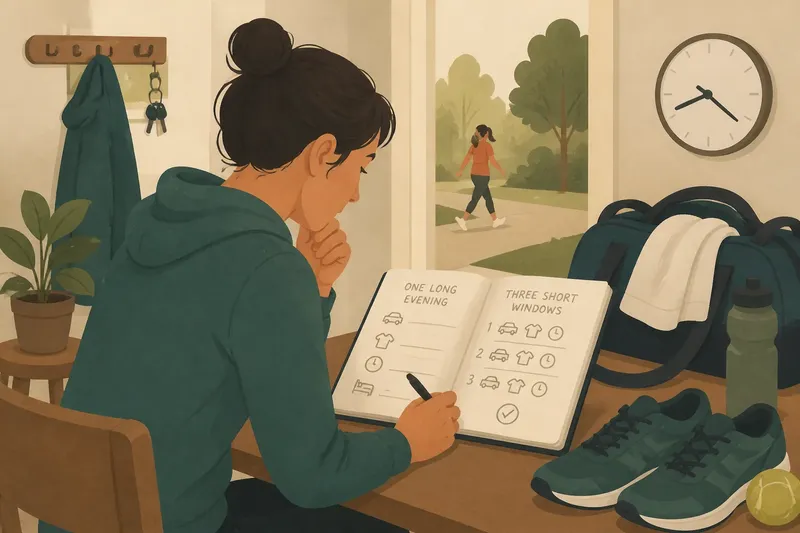
The common mistake with fitting sport into a week is choosing a session pattern that looks tidy on a calendar but ignores the journey, changing time and the rest of the evening. One long evening or three short windows can both work; the better arrangement is the one you can reach without making every session compete with the same fixed demands.
To compare the options, count the whole commitment, not just the time spent playing. Include travel, changing, equipment, recovery and the point at which you need to be home. Then use these seven checks to see which pattern fits your actual week.
1. Count the whole outing
A single long block may mean one journey and one change of clothes, which can make a distant venue easier to justify. But the evening can take over the useful time around it: you may need to leave work promptly, arrange dinner earlier or decline another regular commitment.
Short sessions can be easier to place between other tasks, yet three outings may mean three journeys and three sets of preparation. If the activity is across town, the repeated travel can make a short session feel less short. Write down the door-to-door time for each option, including when you must leave and when you can expect to return.
Imagine you finish work near a pool but live a long way from it. Say you compare one evening swim with three brief visits: the single outing may avoid repeating the long trip, while the shorter pattern could fit only if you already pass the pool on those days. The useful result of this comparison is a calendar that shows the real commitment, rather than the session length alone.
2. Match the pattern to your week
Look at the fixed points first: work shifts, school collection, caring responsibilities, regular appointments and the time public transport runs. A long session needs one reasonably clear stretch. Several short sessions need several openings that do not vanish whenever one meeting overruns or a household task takes longer than expected.
Mark the available windows on a paper diary or calendar app for an ordinary week, not an unusually quiet one. Note which are dependable and which rely on another person changing plans. If only one evening is reliably yours, a longer block may be more realistic. If your schedule changes day by day, short, movable slots may fit better, provided the venue and activity allow you to join without a rigid booking.
Also consider how much decision-making each arrangement creates. A standing weekly evening can become a simple appointment. Three separate windows may offer flexibility, but can require you to keep renegotiating your plans. Choose the amount of flexibility you will actually use, not the amount that sounds appealing.
3. Compare travel and preparation
For each possible session, list what must happen before you start: collecting a racket, packing swimwear, finding a court, changing, or arranging a lift. Then list what follows, such as drying kit, washing clothes or getting home before a late bus. These small tasks often determine whether a plan feels easy to repeat.
One long block usually concentrates preparation into one outing. That can suit activities requiring a booking, a shared team start or a venue with limited opening hours. Several short blocks may be less demanding if you can start close to home, use a local park or keep basic equipment ready by the door. A pair of trainers and a ball call for different logistics from a booked court and specialist kit.
Think of the calendar like a coat hook: a plan fits only if there is a clear place to hang it. If every short slot is wedged between obligations, the pattern may be more fragile than one protected evening. If one long slot has no dependable place to sit, spreading activity out may be the more practical choice.
4. Notice your energy curve
Consider when you tend to have energy, rather than when you wish you had it. Some people prefer to get an activity done in one visit and then leave the rest of the week open. Others find a long evening draining after work and would rather stop while they still feel comfortable.
The activity matters too. A social game, a class with a fixed start, and a relaxed walk place different demands on attention and stamina. A long block can allow time to settle into an activity without rushing. Short sessions can be easier to begin when you are tired, but repeated starts may feel like another task to manage.
Allow room for the journey home and the next morning. If a late session regularly pushes dinner or bedtime aside, the calendar may be technically free while the arrangement remains awkward. A shorter session at a more suitable time can be a better fit, even if it means making another trip.
5. Fit the social arrangement
Some recreational sport is organised around other people. A team may practise at one fixed time; a class may run only on certain evenings; a friend may be available for a regular game. In these cases, the schedule is partly shared, so choosing a convenient-looking alternative may not create a real option.
Ask the organiser about the actual choices: whether you can attend a shorter portion, join another session or take part casually. For an informal activity, ask a friend which days and locations work for both of you. A single longer meeting can make conversation and play feel less hurried, while shorter meetings can be easier to arrange around busy households.
Do not assume that three windows require three full outings. A walk to a nearby court, a brief cycle from home or a short practice in a local green space may need little coordination. Equally, a club session may be more enjoyable when you can stay for the full activity rather than leaving early to fit a tight schedule.
6. Leave room for disruption
A workable plan has a sensible response when the week changes. With one long block, a late shift or family commitment may remove the only planned session. With several short windows, one interruption may leave other opportunities, but only if those openings are genuinely available and not already promised to something else.
Mark a backup option beside each preferred time: another session, a nearby place, or a simple version of the activity that does not need booking. This is not a requirement to replace every missed outing. It is a way to see whether the arrangement depends on a single brittle point, such as one lift or one venue opening.
If the activity involves a booking, membership or shared equipment, check the relevant organiser’s terms before building the schedule around flexibility. The practical choice depends on what is actually available, not on an assumed right to change sessions.
7. Choose a pattern to review
Make a small trial on your calendar rather than deciding that one arrangement must suit you indefinitely. Choose a pattern that is possible in the coming week, then note whether you could leave on time, get there without a scramble and return without displacing something important. Keep the note factual: “bus connection was awkward” is more useful than “I am bad at routines”.
For example, say you have one evening with no caring duties and two short gaps near home. You might put a weekly club game in the clear evening, then keep the local gaps as optional chances to walk or practise a skill. If the long outing repeatedly clashes with dinner, you could ask whether the club has a shorter session; if the gaps never materialise, the club evening may remain the more dependable choice. The visible result is a schedule adjusted to what actually happens, not a promise to do more.
When you compare one long evening with three short sport sessions, judge the arrangement by its fit with travel, energy, other people and the shape of your week. Keep the option that makes taking part feel like a normal appointment rather than a weekly negotiation. If your timetable changes, revisit the choice; changing the pattern is a sensible adjustment, not a failure to stick with it.