The Missed Week Does Not Need a Make-Up Week
A missed week of sport does not need a make-up week. Choose a sensible return that protects your routine, energy and enjoyment.

The most common mistake after a missed week of sport is trying to squeeze extra sessions into the next one. That can crowd out rest, work or family plans, turning a simple scheduling gap into a difficult return. For an ordinary interruption, go back at the next suitable session instead.
Match the reason
Choose your return based on why you missed the activity and how you feel now. The right response to a diary clash is different from the right response to illness, injury or lingering fatigue.
- Routine disruption: If work, travel or family plans displaced your usual session, return at the next scheduled opportunity. If that slot no longer works, choose the next practical one rather than adding extra sessions.
- Low energy: If you still feel worn out, rest or choose a gentler version of the session. If your energy has returned, take part normally and see how it feels.
- Illness or injury: If you have symptoms or an unresolved injury, follow relevant professional advice and ask a qualified health professional when unsure. If you have been cleared to resume, follow any guidance about how to do so.
- Changed access: If your usual pool, court or group is unavailable, check the next practical opening. If fitting it in would make the week unworkable, let that opportunity pass.
- Lost interest: If the activity no longer appeals, try the next ordinary session only if you want to. If it still feels like a poor fit afterwards, consider another activity rather than scheduling more of the same.
Use the reason for the gap to choose what happens next, not to set yourself a repayment target.
Restart the routine
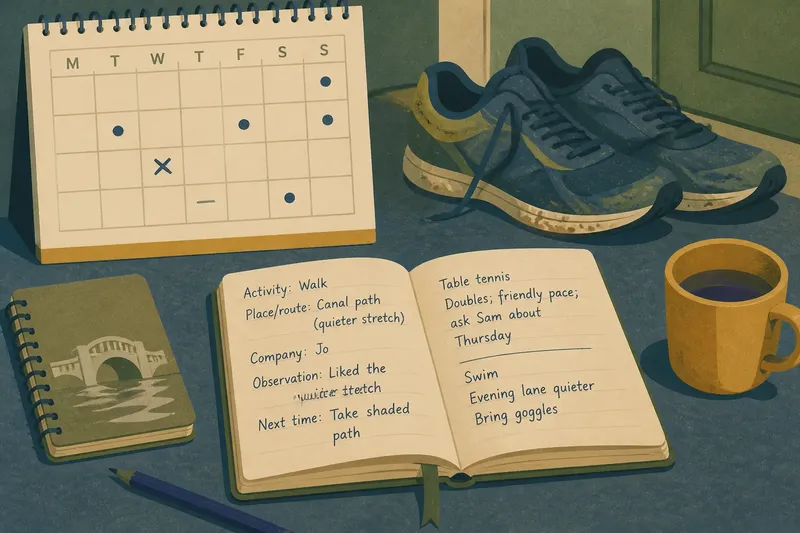
A break can make the small details feel unfamiliar: where to meet, what to bring or how a group begins. That does not mean you need to compensate for missed sessions. Check the venue details, pack your usual kit and ask the organiser about any changes to the plan.
Say you usually attend a Wednesday badminton group, but a family commitment takes up that evening. Imagine your only other opening is Thursday, when adding a court booking would leave you too little time to recover before a demanding workday. You check the group’s next meeting time, pack your racket and return on Wednesday. The observable result is that you rejoin the group without making the rest of the week harder.
If the activity itself needs adjusting, change that session rather than adding another. You might sit out a round of a social game, choose an easier route on a group walk or tell a coach you are easing back into practice. Ask the organiser about club rules or changed arrangements; for health concerns, follow professional advice.
Choose the next session
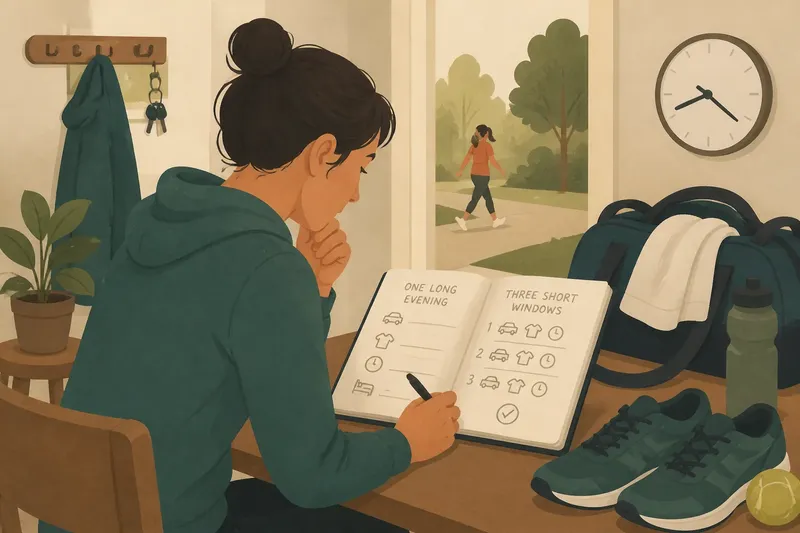
For a routine interruption, the next suitable session is often the simplest point of return. Treat your calendar like a coat hook: put the next session back in its usual place rather than piling extra commitments on top of it.
Before you commit, use these checks to decide what to do:
- Notice: Your usual session still fits your diary; if you can attend without displacing an important commitment, then go to it, otherwise choose the next workable session.
- Notice: You still feel unusually tired; if a gentler session would suit your condition, then reduce the effort, otherwise rest and reconsider later.
- Notice: You have unresolved symptoms or an injury concern; if professional advice is needed, then seek it before returning, otherwise follow the guidance already given.
- Notice: The venue, group or booking arrangements have changed; if the organiser confirms a suitable option, then use it, otherwise wait for the next practical opening.
- Notice: You are unsure what happens at the first session back; if the club or coach can clarify the plan, then ask before attending, otherwise check the club’s published instructions.
- Notice: You no longer look forward to the activity; if you want to give it another try, then attend one ordinary session, otherwise explore a different activity.
What should I do?
What if I missed a booked session?
Check the booking terms or ask the organiser whether you can transfer or reschedule it. If not, treat the booking as missed instead of adding unrelated activity to compensate.
Should I double up after a break?
Do not double up just to repay missed sessions. Return at the next suitable opportunity, and adjust that session if your current condition calls for it.
What if I missed several weeks?
Consider why the break happened and whether the activity still suits your life. If you are ready to return, ask the coach or organiser what to expect at the first session, particularly if arrangements have changed.
What if I feel guilty?
Notice the feeling, then make your choice based on your schedule, wellbeing and interest. An extra session is not a requirement for returning.
Set a return rule
Make a simple rule for yourself: after an ordinary scheduling interruption, return at the next session you can reasonably attend. If illness, injury or fatigue caused the gap, let your condition and any professional advice shape the decision instead.
When you search for how to return after a missed week of sport, keep the practical aim modest: find the next suitable session and make it manageable. Checking the time, venue and any changed instructions is often enough to get back through the door without making the rest of your week carry the cost.